

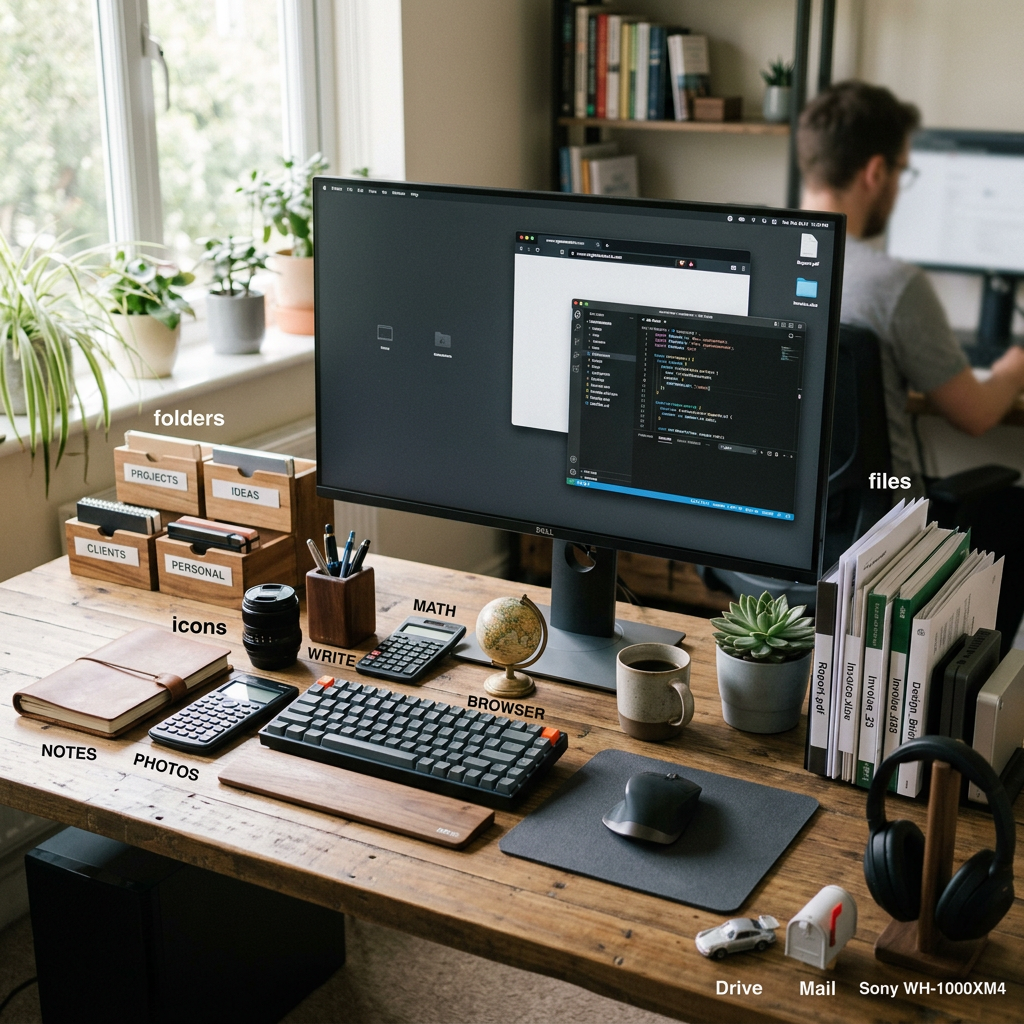
Most people manage life reactively responding to tasks, emotions, and obligations as they appear. A “life operating system” is a way of shifting from reaction to structure.
It’s not a rigid schedule. It’s a personal system for making decisions, managing attention, and staying consistent over time.
1. Define your core inputs (what shapes your life)
Every system has inputs. For a life system, these are:
- Time
- Energy
- Attention
- Information
The goal is to stop treating these as unlimited resources and start managing them intentionally.
2. Set your guiding principles (your “system rules”)
Instead of relying on motivation, you define rules like:
- “If it takes under 2 minutes, do it immediately”
- “If it doesn’t align with my priorities, it gets delayed or removed”
- “Energy matters more than time when planning tasks”
These act like built-in decision shortcuts.
3. Create simple systems for key areas of life
Break life into modules, like an operating system:
- Work/productivity system
- Health/energy system
- Learning/knowledge system
- Relationships system
- Rest/recovery system
Each area should have a simple structure, not complexity.
4. Build feedback loops
A life system only works if it updates.
Include regular check-ins:
- Weekly review: what worked / what didn’t
- Monthly reset: priorities and habits
- Yearly reflection: direction and identity
Without feedback, systems become outdated quickly.
5. Reduce friction, not just increase discipline
A strong system makes good choices easier:
- Keep tools simple
- Remove unnecessary decisions
- Automate repetitive tasks
- Reduce clutter in physical and digital spaces
The best system is the one that requires the least willpower.
6. Separate planning from execution
One of the biggest mistakes is mixing thinking and doing.
Instead:
- Planning happens at specific times
- Execution happens without constant rethinking
This prevents mental overload and decision fatigue.
7. Keep it lightweight
A life system should:
- Evolve over time
- Stay simple enough to actually use
- Avoid becoming a “system for the system’s sake”
If it becomes too complex, it stops working.
The simple takeaway
A life operating system is:
- A structured way to manage time, energy, and attention
- Built on principles, not constant decision-making
- Designed to reduce chaos and increase clarity
Final thought
Most people try to improve their lives by putting in more effort. A life os improves life by adding structure so effort is used more effectively, not more intensely.
